Shooting We Go Again: A Birmingham Cinematographer's Approach to Doing More With Less
Budgets are tightening. Producers are being asked to deliver more for less, commissioners want the same production value at half the cost, and the pressure lands squarely on the crew. As a Birmingham-based Director of Photography, that's the reality I'm working in. And honestly? It's one I'm comfortable with.
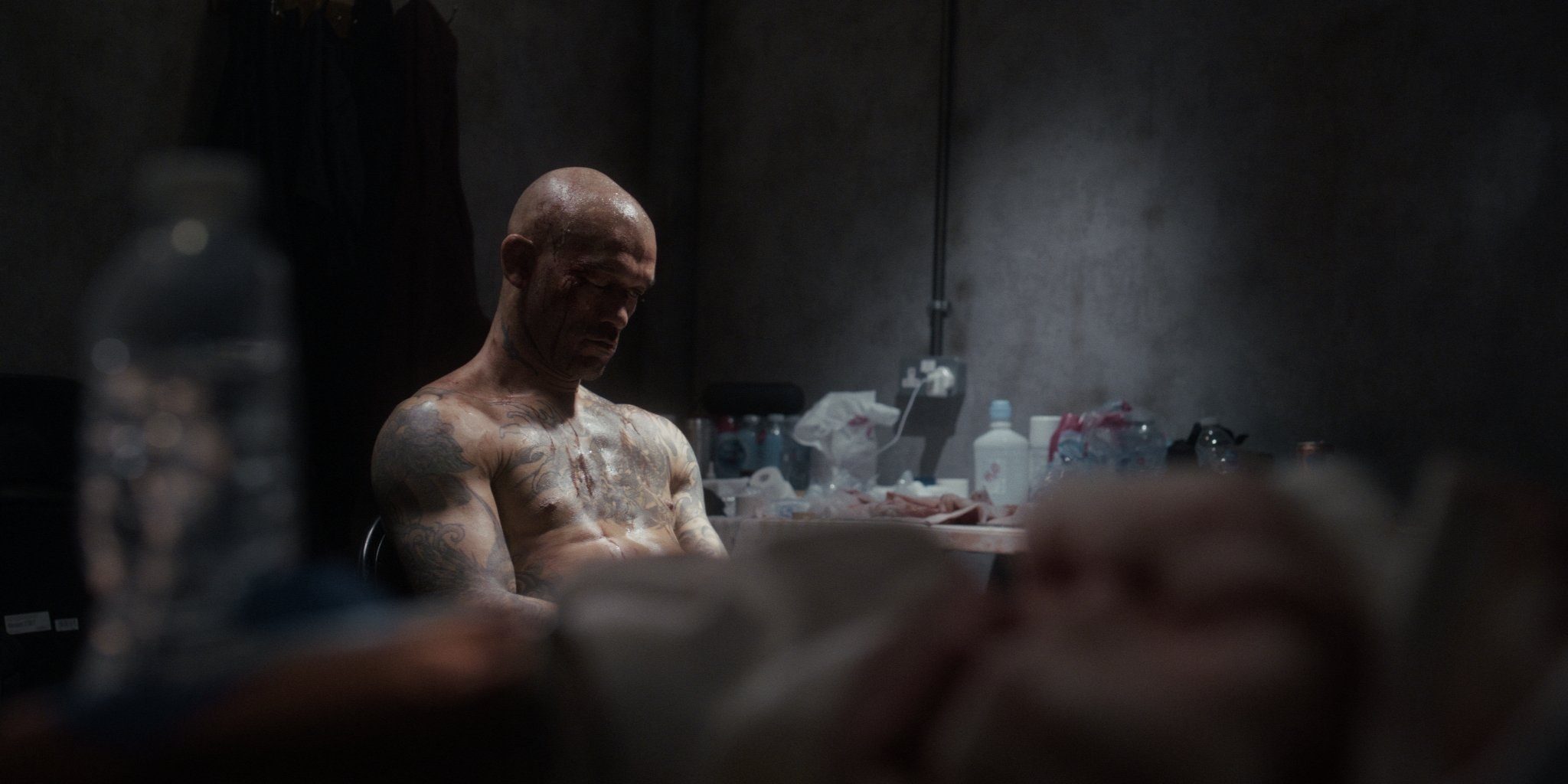
We Go Again is a short film I shot recently alongside director Andy Gough. Near-silent, no dialogue, built entirely on atmosphere. A fighter sitting alone with a loss. The kind of film that has nowhere to hide, if the light feels wrong, if the frame feels imposed, the whole thing collapses. What it didn't have was a big budget. What it did have was intention behind every single decision.
This is how we made it work.
The Brief We Set Ourselves
Before a frame was shot, me and director Andy Gough agreed on the tone. This wasn't going to be pretty. The character has just lost a fight that mattered, the kind of loss that follows you into every room of your house, that sits next to you while you're watching TV at 2am, that's there when you open the fridge and stare into it without knowing why.
Harsh light. Grim reality. No beauty for its own sake.
That brief shaped every lighting decision on the day. As a lighting cameraman, the temptation is always to make things look good. The discipline is knowing when good is wrong.
Vaughan: Why Casting Is a Cinematography Decision
We cast Vaughan because he's been there. He went to the top of the game in the UFC and he knows exactly what a loss at that level feels like. When we sent him the script, his response was immediate: "Fucking hell, I know what that's all about."
That's what you want. An actor who doesn't need to find the emotion, they just need to not hide it. As a DP, that makes your job both easier and harder. Easier because the truth is already in the room. Harder because you have to get out of its way.
The Lighting: Named, Motivated, Intentional
Every setup on this shoot was motivated by a practical source. Nothing arbitrary, nothing that couldn't be justified by the world of the scene.
The bedroom was built around an Aputure MC tucked inside a practical lamp as the motivating source. The Amaran 300C bounced off the wall behind camera, feeding just enough light back into Vaughan's face to read him in a scene set in the middle of the night. No glamour. No fill that announces itself. Just enough.
The kitchen was even simpler. A spotlight mount with a single beam from above. When Vaughan opens the fridge, natural fridge light catches his face from below. That's it. Fridge light is real, it's free, and it does exactly what you need it to do in that moment.
The main interior used an Aputure 1200D pushed through a window at full output, fighting the sun as it came round the building. Harsh, clinical, unrelenting. Right for the character, right for the scene, and achievable with a single unit because the decision behind it was clear.
The living room, Andy's front office dressed as a flat, needed something warmer to contrast the rest. An Amaran F21C as the key, motivated by the practical overhead, and an Amaran F22C on standard TV mode to suggest he's been sitting in front of that screen for hours without moving. Two lights. Done.
Every setup was small. None of them felt like a compromise because each one came from a decision, not a limitation.
Location: Using Birmingham Properly
For the running sequences we needed the city. Not a neutral backdrop, something with weight and character.
Spaghetti Junction gave us exactly that. Brutalist concrete, massive pillars, the geometry of infrastructure built with no thought of cameras and all the better for it. We shot against fading daylight, the sky going blue, no time to rig additional lights. You read what you've got, pick your angles, and move. That's how location work functions at its best, the city does half the job if you let it.
As a Birmingham cinematographer, knowing these locations matters. It's part of what you're hiring when you hire someone rooted in a place.
What Tight Budgets Actually Demand
The furniture for the flat set cost around thirty pounds. Charity shops, Andy's eye for dressing, and disciplined shot selection. One room became two locations, the same space divided and redressed into a bathroom and a bedroom that read as completely separate on screen.
This is not a boast about frugality. It's a point about craft. When the budget is tight, every decision has to be intentional. You can't paper over weak choices with expensive kit or extra shooting days. You have to know what you're doing and why.
I worked without a gaffer on this shoot. Camera and lighting was me and one assistant. The makeup, bruising and scarring handled by JoJo, was exceptional and critical to the whole thing reading as real. Great collaboration across a small crew gets you further than a large one working without clarity.
The result is a short film that looks and feels like it cost significantly more than it did. Not because we cut corners, because we didn't waste anything.
The Broader Point
Producers and agencies who are working with tighter budgets don't need a DP who'll tell them what isn't possible. They need one who'll tell them what is, and then deliver it.
That's the approach I bring to every project, whether it's a commercial brief for a major brand or an independent short. The discipline is the same. The intention is the same. The results speak for themselves.
If you're putting together a project and budget is a real consideration, that's not a problem. Let's talk about what we can make with what you've got.